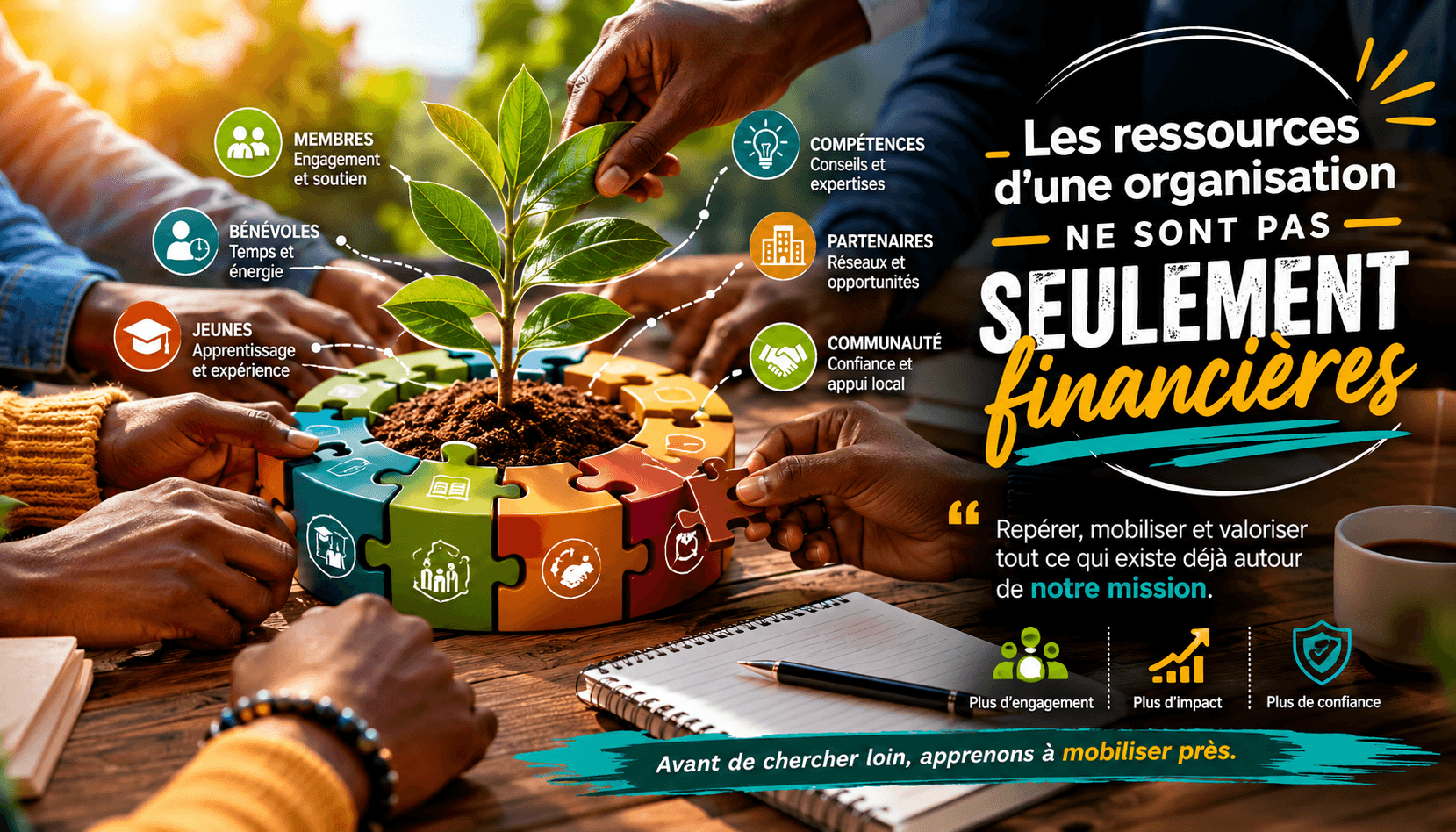

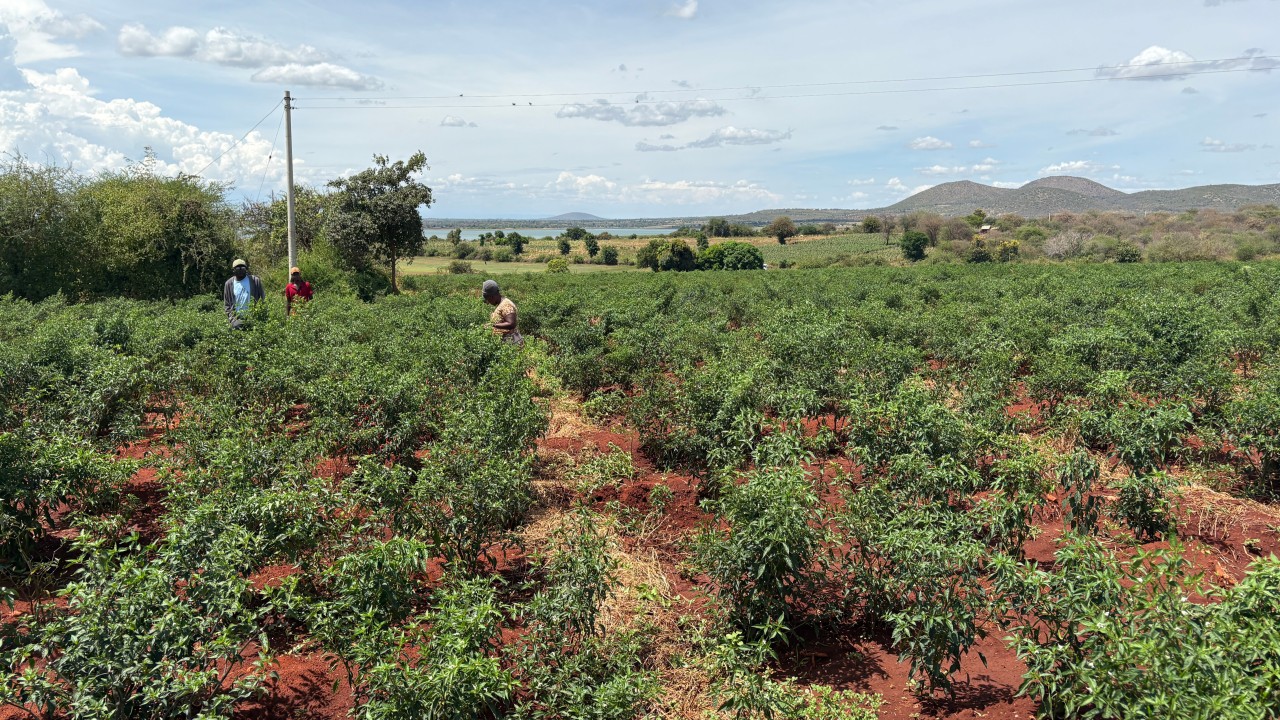
A field-informed perspective on connecting funding, local organizations, and sustainable impact
Every year, significant resources are mobilized to support economic empowerment programs, particularly for women and young people in emerging and developing contexts.
These programs pursue an essential objective: enabling people who are often far from economic opportunities to build their skills, start income-generating activities, strengthen their livelihoods, and gradually move toward greater autonomy.
On the ground, these interventions often produce visible results. Trainings are delivered. Equipment is distributed. Micro-projects are launched. Beneficiaries regain confidence. Local organizations mobilize with commitment and remain close to the communities they serve.
Yet one question remains: what happens once the activities are over?
That is often where the difference between a completed activity and lasting impact becomes clear.
From listening to women, young people, and local organizations involved in these programs, one observation comes up repeatedly: many beneficiaries take part in several trainings, receive occasional support, and still find themselves with few practical tools to continue once the project activity ends.
They know they have learned something. But they do not always know how to apply it, how to structure their activity, how to move forward on their own, or where to turn when the first difficulties arise.
This reality does not reflect a lack of motivation. Nor does it question the commitment of the organizations implementing these programs.
It points instead to an issue of continuity, structure, and follow-up.
Economic empowerment is not built only when an activity is launched. It is built over time, when a beneficiary learns how to manage an activity, access a market, monitor income, anticipate costs, adjust an offer, and withstand unexpected challenges.
This is often where programs have the greatest opportunity to go deeper.
The challenge is not simply to do more, but to build stronger connections between strategy, funding, local organizations, field follow-up, and the results programs are meant to achieve.
Beyond activities: what are we really trying to transform?
In economic empowerment programs, completed activities are often the easiest elements to track.
We can count the number of people trained, the number of kits distributed, the number of sessions delivered, the number of micro-projects funded, or the number of beneficiaries reached.
These indicators are necessary. They help demonstrate that implementation is taking place.
But they do not always tell us what has actually changed in the lives of beneficiaries.
Was a trained woman able to launch or consolidate a viable activity?
Does a young person who received support have access to a real market?
Is the income generated regular, or only occasional?
Does the activity still exist several months after the project ends?
Does the local organization have the tools needed to continue follow-up?
Do the data collected help explain what is working, what is holding people back, and what needs to be adjusted?
These questions matter because they shift the focus.
They move us from a logic of delivery to a logic of transformation.
Impact is not measured only by what was done. It is also measured by what continues to exist, function, and create value after activities have ended.
In other words, the real question is not only: “What did we deliver during the project?” It is also: “What can beneficiaries, local organizations, and communities continue to do when external support decreases or comes to an end?”
When training is no longer enough
Training is often an important entry point in economic empowerment programs.
It transfers knowledge, builds confidence, creates collective momentum, and can open new possibilities.
However, one observation often emerges from the field: beneficiaries do not always lack training. What they often lack are the bridges between training and action.
Many know they are expected to start a business, sell, manage, or save. But when it comes time to put that knowledge into practice, the questions become very concrete: how do I set a price? How do I find a customer? How do I calculate a margin? How do I manage a small stock? How do I negotiate with a supplier? How do I reinvest without weakening my household? How do I adapt my activity when demand changes?
This is where post-training support becomes decisive.
Without follow-up, training can remain a one-off experience. With appropriate support, it becomes a lever for progress.
In other words, economic empowerment truly begins when knowledge becomes practice.
Support should therefore not only transmit knowledge. It should help beneficiaries correct, adjust, consolidate, and gradually move forward with greater autonomy.
Local organizations: an essential link that needs stronger tools
Local organizations play a central role in program success.
They know the communities. They understand social realities. They can identify beneficiaries, recognize practical constraints, and maintain close relationships on the ground.
In many contexts, they are what makes implementation possible.
Yet these organizations do not always have the resources, tools, or internal systems required to provide quality follow-up over time.
Many operate with limited budgets, small teams, and strong pressure to deliver activities. They move from one project to another, from one report to another, sometimes without the time or resources to capitalize on lessons learned, structure their data, or follow beneficiaries after activities have ended.
This is not because they are not working.
On the contrary, many are doing remarkable work on the ground.
But their contribution can be difficult to value because it is not sufficiently documented. Data are scattered. Assessments are occasional. Follow-up tools are limited. Reports describe activities, but do not always make it possible to understand the changes produced.
This creates a challenge for the entire delivery ecosystem.
Communities do not always see how the support received fits into a longer-term trajectory. Local organizations struggle to demonstrate the full scope of their work. International organizations and donors, in turn, may not have sufficient data to assess the real impact of their investments.
And gradually, a familiar cycle repeats itself: train, fund, close, report, start again.
To move beyond this cycle, the organizational development of local structures should not be treated as a secondary form of support. It should be understood as a direct investment in program quality and sustainability.
Strengthening local organizations without weakening the implementation chain
The question is not about replacing one actor with another.
Nor is it about opposing donors, international organizations, and local organizations.
Each actor has legitimacy, a role, and a distinct value in the development ecosystem.
Donors bring resources, strategic direction, accountability requirements, and funding frameworks. International organizations often bring coordination capacity, management systems, compliance, scale, and reporting. Local organizations bring territorial anchoring, community knowledge, and continuity of relationships.
The issue, therefore, is to strengthen collaboration between these different levels without weakening any link in the chain.
This requires integrating dedicated resources for strengthening local organizations from the design stage of programs: governance, financial management, digital tools, internal procedures, monitoring and evaluation, documentation, capitalization, compliance, transparency, and reporting quality.
In many cases, local organizations are not excluded from larger funding opportunities because they lack impact on the ground. They are often excluded because their administrative, financial, and institutional structures do not yet meet expected standards.
Some do not have up-to-date financial statements. Others prepare financial reports manually, due to a lack of tools or professional support. Organizational charts do not always clearly separate governance from execution. Statutes may lack precision. Audit, control, and accountability mechanisms are not always in place.
These gaps naturally create caution among major funders, who must ensure traceability of funds, compliance of expenditures, and the quality of results.
But this reality can also be approached differently.
Rather than viewing organizational weakness as a permanent obstacle, it can become a structuring component of the program.
In other words, part of the funding should not only finance activities for beneficiaries. It should also strengthen the capacity of local organizations to manage, document, follow up, and report.
This is a win-win approach.
Local organizations become more credible and professional. International organizations benefit from stronger partners. Donors obtain better traceability and more reliable data. Communities receive more continuous support.
Ultimately, the entire program gains in impact, clarity, and sustainability.
Programs need to better integrate economic, social, and institutional realities
A program can be well designed on paper and still face significant limitations when confronted with realities on the ground.
These realities are not only economic.
They can also be social, logistical, administrative, security-related, or institutional.
The movement of goods and people, access to certain areas, availability of suppliers, investor confidence, stability of supply chains, and the fluidity of administrative procedures all directly influence the viability of supported activities.
These factors are not matters of partisan political analysis.
They are operational parameters.
When an entrepreneur cannot easily access suppliers, when a local organization cannot ensure regular follow-up, when a market becomes difficult to reach, or when an investor hesitates to engage in an environment perceived as uncertain, it is not only one individual activity that is affected.
The entire economic chain around the beneficiary becomes more fragile.
In this type of context, programs must be able to adapt.
This means integrating these realities from the design stage: in risk analysis, sector selection, support modalities, local partnerships, budget planning, and performance indicators.
The objective is not to judge contexts.
The objective is to read them more accurately in order to design programs that are more realistic, more resilient, and more useful.
Field follow-up: where sustainability and learning are built
Follow-up is often framed as a reporting requirement.
It should also be seen as a learning function.
Good follow-up is not only about verifying that activities were completed. It helps understand what happens afterward: what beneficiaries apply, what they abandon, what blocks them, what works, and what needs to be adjusted.
This is particularly important in economic empowerment programs.
After training or financial support, a beneficiary may face very concrete challenges: lack of customers, difficulty managing stock, high transport costs, family pressure, limited access to capital, poor understanding of the market, or confusion between turnover and actual profit.
Without follow-up, these difficulties remain invisible.
With well-structured follow-up, they become useful information for improving the program.
Follow-up also makes it possible to observe whether beneficiaries are genuinely progressing toward greater autonomy. The question is not only whether an activity was completed, but what supported people can continue to do when external support decreases or ends.
This is often where the strength of a program becomes visible: in the ability of beneficiaries and communities to preserve certain gains, adjust their practices, and continue moving forward with external support that becomes less and less necessary.
That is why local organizations need simple, practical, and adapted tools: follow-up forms, dashboards, progress indicators, accessible digital tools, data collection methods, field visit protocols, capitalization templates, and feedback mechanisms.
Follow-up should not be seen as one more administrative burden.
It should become a strategic function of the program.
Toward a chain of trust, professionalization, and impact
The sustainability of economic empowerment programs depends on the quality of the entire support system.
It is not enough to fund. It is not enough to coordinate. It is not enough to implement. It is not enough for beneficiaries to participate.
The system as a whole must function coherently.
This requires trust, of course. But it also requires shared standards, common tools, and better information flow.
A stronger support system could rest on a few simple principles.
First, integrate an organizational diagnosis of local partners at the start of the program.
Then, allocate a dedicated budget to strengthen their administrative, financial, digital, and methodological capacities.
Next, put in place shared tools for follow-up, documentation, and capitalization.
Finally, organize regular reviews to analyze results, adjust activities, and track the evolution of beneficiaries over time.
This approach does not reduce the legitimacy of existing actors.
On the contrary, it strengthens each actor in its role.
The donor funds with greater visibility. The international organization coordinates with stronger local partners. The local organization acts with greater credibility. The beneficiary receives better support. The community sees more lasting results.
It is through this logic that development assistance can gain in continuity, transparency, and impact.
Measuring what truly changes, and what lasts
One of the major challenges of economic empowerment programs is to measure more than implementation.
Deliverables are necessary, but they are not enough.
It is also important to observe what truly changes, what is sustained over time, and what beneficiaries can continue to do after support has ended.
Have beneficiaries consolidated their activity? Have they increased their income in a stable way? Have they improved their management capacity? Do they have access to new markets? Are local organizations better structured? Are follow-up tools still being used after the project ends? Do communities perceive lasting improvement? Are the lessons from the program used to better design future interventions?
These questions help connect investments to the desired effects.
They also help prevent each new program from starting from zero.
In some cases, it may be useful to compare the evolution of supported beneficiaries with that of comparable groups or contexts. Not to make evaluation heavier, but to better observe what can reasonably be linked to the intervention: what changed, for whom, under what conditions, and with what level of durability.
This kind of analysis helps move beyond general impressions. It makes it possible to better understand the tangible effects of the program, adjust approaches that work less well, and strengthen those that produce lasting results.
Capitalization must become a strategic asset.
Each intervention should leave behind not only completed activities, but also data, lessons learned, tools, stronger organizations, and better-supported communities.
Most importantly, the lessons drawn from one group or one territory should be able to improve support for other groups. This is how accumulated experience helps adjust certain practices, adapt methods, and gradually strengthen the quality of interventions.
For lasting impact: structure better, not heavier
Economic empowerment programs do not lack good intentions, resources, or committed actors.
Their impact depends, however, on their ability to connect several dimensions: the donor’s strategy, the coordination role of international organizations, the capacity of local organizations, the real needs of beneficiaries, field constraints, and the conditions required for sustainability.
The issue, therefore, is not to make programs more complex.
It is to structure them better.
Structuring better also means thinking about sustainability from the outset. A program should not only ask what it makes possible during its implementation period, but what beneficiaries, local organizations, and communities will be able to continue doing once support has ended.
This is where capitalization takes on its full meaning. It is not only about producing a final report. It is about learning, adjusting practices, improving tools, and ensuring that the experience gained with one group can benefit others.
Structuring better means planning follow-up from the beginning. It means funding organizational capacity, not only visible activities. It means documenting results in a useful way. It means equipping local organizations without weakening the existing delivery ecosystem. It means building trust between the different levels of implementation. It means measuring transformation, not only deliverables.
Economic empowerment must be understood as a progressive, systemic, and sustainable process.
It involves beneficiaries, of course. But it also involves the organizations that support them, the markets in which their activities operate, the institutions that shape their environment, and the partners that fund the interventions.
Part of the impact lies precisely in the ability to connect field realities, governance, data, organizations, and results.
A field-informed perspective on connecting funding, local organizations, and sustainable impact
Every year, significant resources are mobilized to support economic empowerment programs, particularly for women and young people in emerging and developing contexts.
These programs pursue an essential objective: enabling people who are often far from economic opportunities to build their skills, start income-generating activities, strengthen their livelihoods, and gradually move toward greater autonomy.
On the ground, these interventions often produce visible results. Trainings are delivered. Equipment is distributed. Micro-projects are launched. Beneficiaries regain confidence. Local organizations mobilize with commitment and remain close to the communities they serve.
Yet one question remains: what happens once the activities are over?
That is often where the difference between a completed activity and lasting impact becomes clear.
From listening to women, young people, and local organizations involved in these programs, one observation comes up repeatedly: many beneficiaries take part in several trainings, receive occasional support, and still find themselves with few practical tools to continue once the project activity ends.
They know they have learned something. But they do not always know how to apply it, how to structure their activity, how to move forward on their own, or where to turn when the first difficulties arise.
This reality does not reflect a lack of motivation. Nor does it question the commitment of the organizations implementing these programs.
It points instead to an issue of continuity, structure, and follow-up.
Economic empowerment is not built only when an activity is launched. It is built over time, when a beneficiary learns how to manage an activity, access a market, monitor income, anticipate costs, adjust an offer, and withstand unexpected challenges.
This is often where programs have the greatest opportunity to go deeper.
The challenge is not simply to do more, but to build stronger connections between strategy, funding, local organizations, field follow-up, and the results programs are meant to achieve.
Beyond activities: what are we really trying to transform?
In economic empowerment programs, completed activities are often the easiest elements to track.
We can count the number of people trained, the number of kits distributed, the number of sessions delivered, the number of micro-projects funded, or the number of beneficiaries reached.
These indicators are necessary. They help demonstrate that implementation is taking place.
But they do not always tell us what has actually changed in the lives of beneficiaries.
Was a trained woman able to launch or consolidate a viable activity?
Does a young person who received support have access to a real market?
Is the income generated regular, or only occasional?
Does the activity still exist several months after the project ends?
Does the local organization have the tools needed to continue follow-up?
Do the data collected help explain what is working, what is holding people back, and what needs to be adjusted?
These questions matter because they shift the focus.
They move us from a logic of delivery to a logic of transformation.
Impact is not measured only by what was done. It is also measured by what continues to exist, function, and create value after activities have ended.
In other words, the real question is not only: “What did we deliver during the project?” It is also: “What can beneficiaries, local organizations, and communities continue to do when external support decreases or comes to an end?”
When training is no longer enough
Training is often an important entry point in economic empowerment programs.
It transfers knowledge, builds confidence, creates collective momentum, and can open new possibilities.
However, one observation often emerges from the field: beneficiaries do not always lack training. What they often lack are the bridges between training and action.
Many know they are expected to start a business, sell, manage, or save. But when it comes time to put that knowledge into practice, the questions become very concrete: how do I set a price? How do I find a customer? How do I calculate a margin? How do I manage a small stock? How do I negotiate with a supplier? How do I reinvest without weakening my household? How do I adapt my activity when demand changes?
This is where post-training support becomes decisive.
Without follow-up, training can remain a one-off experience. With appropriate support, it becomes a lever for progress.
In other words, economic empowerment truly begins when knowledge becomes practice.
Support should therefore not only transmit knowledge. It should help beneficiaries correct, adjust, consolidate, and gradually move forward with greater autonomy.
Local organizations: an essential link that needs stronger tools
Local organizations play a central role in program success.
They know the communities. They understand social realities. They can identify beneficiaries, recognize practical constraints, and maintain close relationships on the ground.
In many contexts, they are what makes implementation possible.
Yet these organizations do not always have the resources, tools, or internal systems required to provide quality follow-up over time.
Many operate with limited budgets, small teams, and strong pressure to deliver activities. They move from one project to another, from one report to another, sometimes without the time or resources to capitalize on lessons learned, structure their data, or follow beneficiaries after activities have ended.
This is not because they are not working.
On the contrary, many are doing remarkable work on the ground.
But their contribution can be difficult to value because it is not sufficiently documented. Data are scattered. Assessments are occasional. Follow-up tools are limited. Reports describe activities, but do not always make it possible to understand the changes produced.
This creates a challenge for the entire delivery ecosystem.
Communities do not always see how the support received fits into a longer-term trajectory. Local organizations struggle to demonstrate the full scope of their work. International organizations and donors, in turn, may not have sufficient data to assess the real impact of their investments.
And gradually, a familiar cycle repeats itself: train, fund, close, report, start again.
To move beyond this cycle, the organizational development of local structures should not be treated as a secondary form of support. It should be understood as a direct investment in program quality and sustainability.
Strengthening local organizations without weakening the implementation chain
The question is not about replacing one actor with another.
Nor is it about opposing donors, international organizations, and local organizations.
Each actor has legitimacy, a role, and a distinct value in the development ecosystem.
Donors bring resources, strategic direction, accountability requirements, and funding frameworks. International organizations often bring coordination capacity, management systems, compliance, scale, and reporting. Local organizations bring territorial anchoring, community knowledge, and continuity of relationships.
The issue, therefore, is to strengthen collaboration between these different levels without weakening any link in the chain.
This requires integrating dedicated resources for strengthening local organizations from the design stage of programs: governance, financial management, digital tools, internal procedures, monitoring and evaluation, documentation, capitalization, compliance, transparency, and reporting quality.
In many cases, local organizations are not excluded from larger funding opportunities because they lack impact on the ground. They are often excluded because their administrative, financial, and institutional structures do not yet meet expected standards.
Some do not have up-to-date financial statements. Others prepare financial reports manually, due to a lack of tools or professional support. Organizational charts do not always clearly separate governance from execution. Statutes may lack precision. Audit, control, and accountability mechanisms are not always in place.
These gaps naturally create caution among major funders, who must ensure traceability of funds, compliance of expenditures, and the quality of results.
But this reality can also be approached differently.
Rather than viewing organizational weakness as a permanent obstacle, it can become a structuring component of the program.
In other words, part of the funding should not only finance activities for beneficiaries. It should also strengthen the capacity of local organizations to manage, document, follow up, and report.
This is a win-win approach.
Local organizations become more credible and professional. International organizations benefit from stronger partners. Donors obtain better traceability and more reliable data. Communities receive more continuous support.
Ultimately, the entire program gains in impact, clarity, and sustainability.
Programs need to better integrate economic, social, and institutional realities
A program can be well designed on paper and still face significant limitations when confronted with realities on the ground.
These realities are not only economic.
They can also be social, logistical, administrative, security-related, or institutional.
The movement of goods and people, access to certain areas, availability of suppliers, investor confidence, stability of supply chains, and the fluidity of administrative procedures all directly influence the viability of supported activities.
These factors are not matters of partisan political analysis.
They are operational parameters.
When an entrepreneur cannot easily access suppliers, when a local organization cannot ensure regular follow-up, when a market becomes difficult to reach, or when an investor hesitates to engage in an environment perceived as uncertain, it is not only one individual activity that is affected.
The entire economic chain around the beneficiary becomes more fragile.
In this type of context, programs must be able to adapt.
This means integrating these realities from the design stage: in risk analysis, sector selection, support modalities, local partnerships, budget planning, and performance indicators.
The objective is not to judge contexts.
The objective is to read them more accurately in order to design programs that are more realistic, more resilient, and more useful.
Field follow-up: where sustainability and learning are built
Follow-up is often framed as a reporting requirement.
It should also be seen as a learning function.
Good follow-up is not only about verifying that activities were completed. It helps understand what happens afterward: what beneficiaries apply, what they abandon, what blocks them, what works, and what needs to be adjusted.
This is particularly important in economic empowerment programs.
After training or financial support, a beneficiary may face very concrete challenges: lack of customers, difficulty managing stock, high transport costs, family pressure, limited access to capital, poor understanding of the market, or confusion between turnover and actual profit.
Without follow-up, these difficulties remain invisible.
With well-structured follow-up, they become useful information for improving the program.
Follow-up also makes it possible to observe whether beneficiaries are genuinely progressing toward greater autonomy. The question is not only whether an activity was completed, but what supported people can continue to do when external support decreases or ends.
This is often where the strength of a program becomes visible: in the ability of beneficiaries and communities to preserve certain gains, adjust their practices, and continue moving forward with external support that becomes less and less necessary.
That is why local organizations need simple, practical, and adapted tools: follow-up forms, dashboards, progress indicators, accessible digital tools, data collection methods, field visit protocols, capitalization templates, and feedback mechanisms.
Follow-up should not be seen as one more administrative burden.
It should become a strategic function of the program.
Toward a chain of trust, professionalization, and impact
The sustainability of economic empowerment programs depends on the quality of the entire support system.
It is not enough to fund. It is not enough to coordinate. It is not enough to implement. It is not enough for beneficiaries to participate.
The system as a whole must function coherently.
This requires trust, of course. But it also requires shared standards, common tools, and better information flow.
A stronger support system could rest on a few simple principles.
First, integrate an organizational diagnosis of local partners at the start of the program.
Then, allocate a dedicated budget to strengthen their administrative, financial, digital, and methodological capacities.
Next, put in place shared tools for follow-up, documentation, and capitalization.
Finally, organize regular reviews to analyze results, adjust activities, and track the evolution of beneficiaries over time.
This approach does not reduce the legitimacy of existing actors.
On the contrary, it strengthens each actor in its role.
The donor funds with greater visibility. The international organization coordinates with stronger local partners. The local organization acts with greater credibility. The beneficiary receives better support. The community sees more lasting results.
It is through this logic that development assistance can gain in continuity, transparency, and impact.
Measuring what truly changes, and what lasts
One of the major challenges of economic empowerment programs is to measure more than implementation.
Deliverables are necessary, but they are not enough.
It is also important to observe what truly changes, what is sustained over time, and what beneficiaries can continue to do after support has ended.
Have beneficiaries consolidated their activity? Have they increased their income in a stable way? Have they improved their management capacity? Do they have access to new markets? Are local organizations better structured? Are follow-up tools still being used after the project ends? Do communities perceive lasting improvement? Are the lessons from the program used to better design future interventions?
These questions help connect investments to the desired effects.
They also help prevent each new program from starting from zero.
In some cases, it may be useful to compare the evolution of supported beneficiaries with that of comparable groups or contexts. Not to make evaluation heavier, but to better observe what can reasonably be linked to the intervention: what changed, for whom, under what conditions, and with what level of durability.
This kind of analysis helps move beyond general impressions. It makes it possible to better understand the tangible effects of the program, adjust approaches that work less well, and strengthen those that produce lasting results.
Capitalization must become a strategic asset.
Each intervention should leave behind not only completed activities, but also data, lessons learned, tools, stronger organizations, and better-supported communities.
Most importantly, the lessons drawn from one group or one territory should be able to improve support for other groups. This is how accumulated experience helps adjust certain practices, adapt methods, and gradually strengthen the quality of interventions.
For lasting impact: structure better, not heavier
Economic empowerment programs do not lack good intentions, resources, or committed actors.
Their impact depends, however, on their ability to connect several dimensions: the donor’s strategy, the coordination role of international organizations, the capacity of local organizations, the real needs of beneficiaries, field constraints, and the conditions required for sustainability.
The issue, therefore, is not to make programs more complex.
It is to structure them better.
Structuring better also means thinking about sustainability from the outset. A program should not only ask what it makes possible during its implementation period, but what beneficiaries, local organizations, and communities will be able to continue doing once support has ended.
This is where capitalization takes on its full meaning. It is not only about producing a final report. It is about learning, adjusting practices, improving tools, and ensuring that the experience gained with one group can benefit others.
Structuring better means planning follow-up from the beginning. It means funding organizational capacity, not only visible activities. It means documenting results in a useful way. It means equipping local organizations without weakening the existing delivery ecosystem. It means building trust between the different levels of implementation. It means measuring transformation, not only deliverables.
Economic empowerment must be understood as a progressive, systemic, and sustainable process.
It involves beneficiaries, of course. But it also involves the organizations that support them, the markets in which their activities operate, the institutions that shape their environment, and the partners that fund the interventions.
Part of the impact lies precisely in the ability to connect field realities, governance, data, organizations, and results.
This is where expertise in entrepreneurship, organizational development, and program management can bring real added value: helping actors transform one-off interventions into more coherent, better documented, more resilient systems that are more useful to communities.