

A small activity can generate sales every day and still not allow the person behind it to live decently, reinvest, or deal with an unexpected expense.
This is a reality often seen in economic empowerment programs, local initiatives, and projects supporting women, young people, or people looking for income opportunities. Someone learns a trade, starts an activity, sells their first products or services, and it may seem that the hardest part has been done.
But selling is not always enough.
The real question lies elsewhere: does the activity actually cover its costs? Does it generate a margin? Can it withstand a drop in sales, a rise in prices, equipment failure, or an unexpected expense?
This is often where the limits begin to appear.
The problem is not always a lack of courage, motivation, or know-how. In many cases, people know how to produce, sell, cook, process, grow, repair, sew, or provide a useful service. They work hard. They adapt. They look for customers. They make do with the means available.
But an activity does not become solid simply because it exists.
It begins to hold when it is understood, organized, followed, and able to create enough value to last.
Know-how is not always enough
Training someone in an activity is important.
But it is not always sufficient.
A person may know very well how to make a product, prepare food, process raw materials, provide a service, or sell at a market, without fully mastering the elements that allow the activity to hold over time.
Knowing how to produce is one thing. Understanding what the activity really costs is another.
One must know the price of raw materials, the time needed to produce, transport costs, possible losses, the cost of replacing equipment, the level of sales required to cover expenses, and the margin that remains once costs have been paid.
When these elements remain unclear, the activity may keep moving without truly progressing.
It may look like it is working, while still relying on a very fragile balance.
Money coming in is not always money earned
In many small economic activities, one of the most common confusions is between the money that comes in and the money that is actually earned.
A person may sell regularly and see money moving through the business. But if they do not clearly separate revenue, expenses, debts, reinvestment, and profit, they may believe the activity is bringing in more than it really is.
The money circulating in an activity is not always money that is available.
Revenue can create an impression of success. But revenue is not what sustains an activity. What matters is what remains after expenses.
An activity can sell a lot and still be barely profitable. It can generate income, yet not allow the person to restock, replace a tool, pay for transport, save money, or face an unexpected cost.
This is often where difficulties begin.
When profit is unclear, decisions become riskier. Prices are set randomly. Personal money and business money get mixed. Reinvestment happens too little or too late. Financing is requested without a clear understanding of what it is supposed to solve.
A stronger activity often begins with one simple thing: understanding what comes in, what goes out, and what remains.
Many activities exist without a clear economic model
An activity can be useful without yet having a clear economic logic.
It may respond to a real need, attract a few customers, and operate on a small scale. But if it is not clear how it generates income, which costs weigh the most, which customers return, and which resources are needed to keep going, its ability to last remains difficult to demonstrate.
A business model is not a concept reserved for large companies.
Even a small activity needs a simple logic: who pays, for what, at what price, how often, with which costs, and with what margin.
Without this clarity, the activity often depends on personal effort, luck, resourcefulness, or temporary financial support.
A grant, a donation, equipment, or a microloan does not replace an economic model.
These can support an activity, but they are not enough to make it sustainable if the foundations are not understood.
Technical training must be complemented by support
Many programs do important work by training people in trades or income-generating activities.
This is necessary.
But training is not the same as support.
Training provides a starting point. Support helps people navigate the first real obstacles.
Training transfers knowledge or skills. Support helps apply them in real life, with field constraints, customer reactions, unexpected costs, sales difficulties, hesitation, mistakes, and the adjustments that become necessary.
It is often after the training that the real challenges begin.
The person has to find their first customers, set prices, manage stock, track expenses, face competition, organize their time, negotiate with suppliers, handle late payments, and decide what to do when sales decline.
Without support, many people are left alone with these decisions.
They have learned how to do the activity, but not always how to manage it.
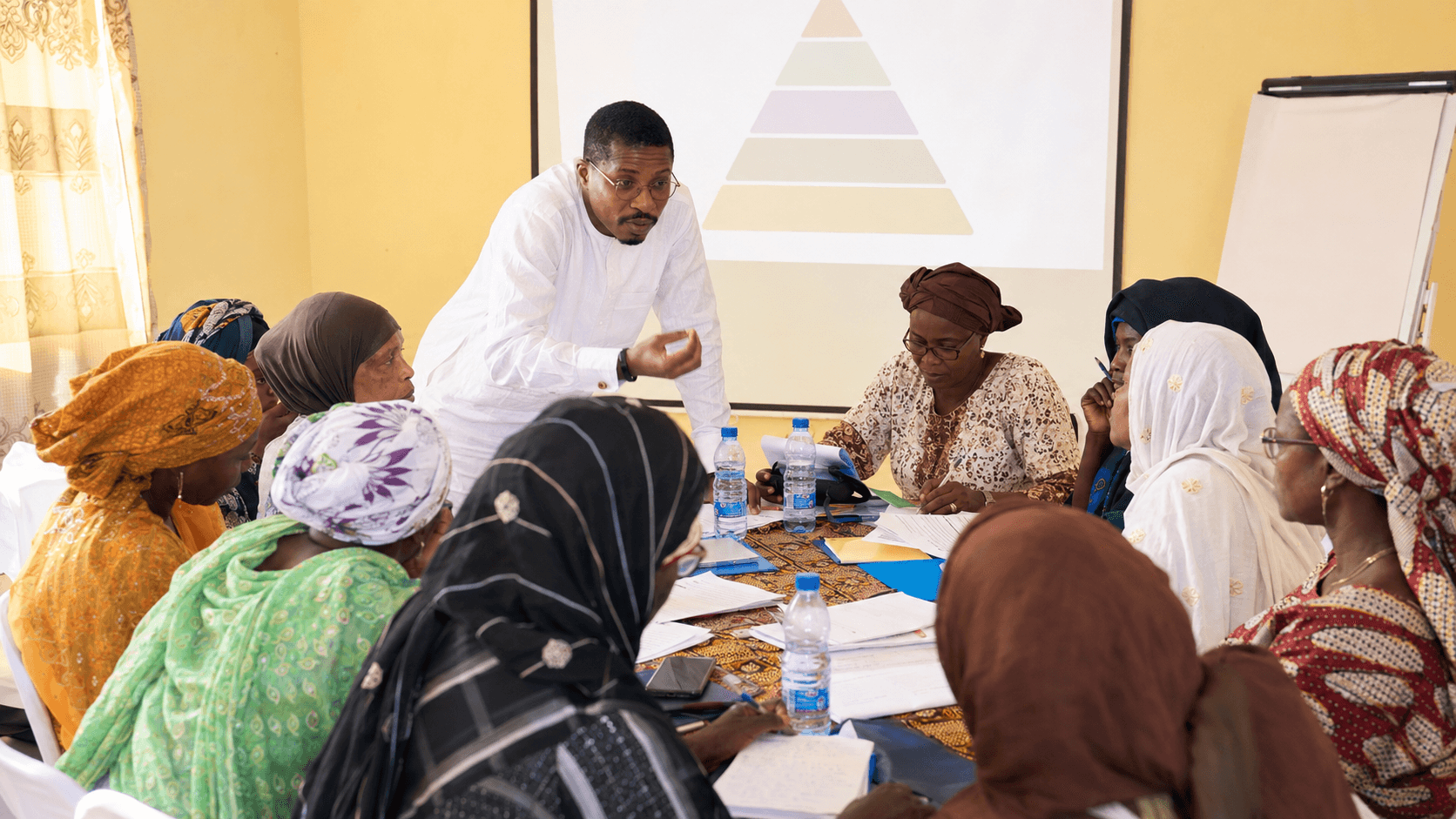
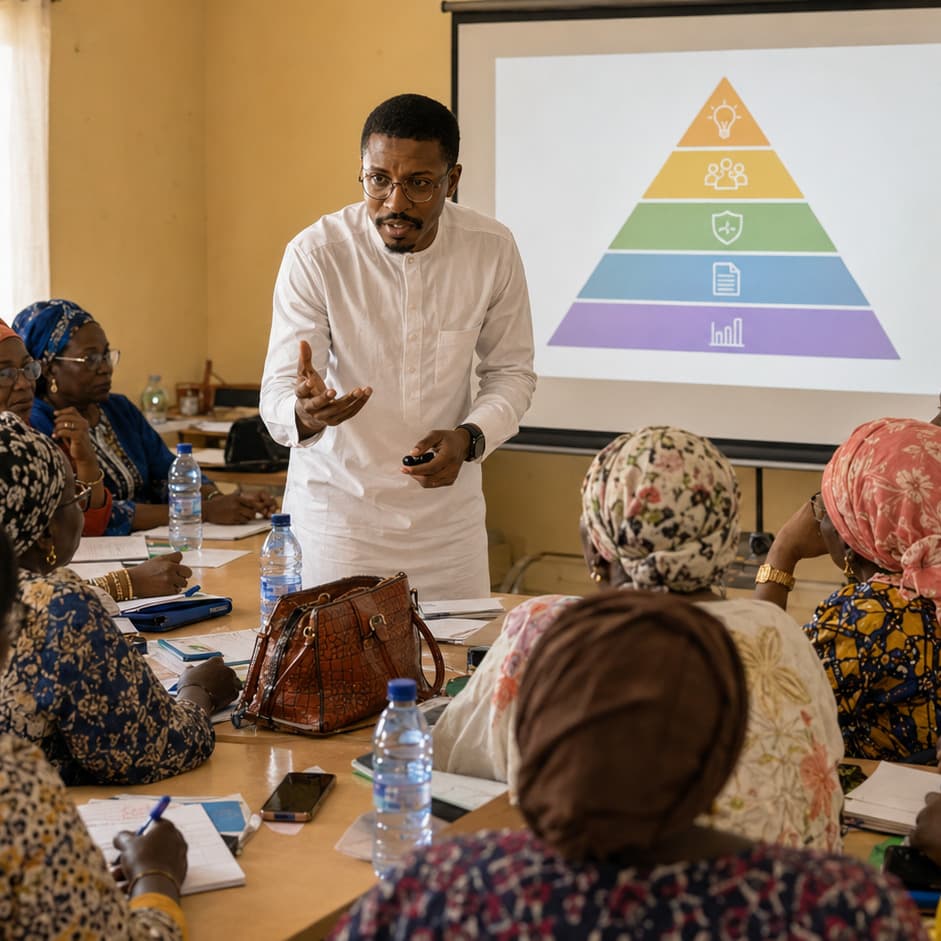
That is why economic empowerment requires more than one-off training. It requires follow-up, simple tools, regular exchanges, practical advice, and the ability to adjust the activity over time.
Financing sometimes comes too early
Financing matters, but it does not solve everything.
In some cases, a person asks for financial support before their activity is sufficiently understood. They know they need money, but they do not always know exactly for what purpose, at what moment, with what expected effect, and with what repayment capacity.
This is where financing can become risky.
Poorly prepared financing can increase pressure instead of strengthening the activity. It can be used to buy equipment that was not a priority, build too much stock, cover poorly estimated expenses, or support an activity whose income remains insufficient.
Before seeking financing, the activity must be understood.
One must know what is truly missing, what is slowing down sales, what costs too much, what can be improved, and what the money should make possible.
Good financing does not simply add resources.
It supports a logic that is already clear.
Formalizing an activity is not enough to make it viable
In many contexts, registering an activity is seen as an important step toward credibility.
And it is. Formalizing an activity can open doors. It can make it easier to access certain programs, partnerships, markets, or financing opportunities. It can also give official existence to something that was already being built.
But formalization is not enough.
An administrative document does not prove that the activity is profitable. A registration certificate does not show that costs are under control. Formal status does not guarantee a regular customer base or the ability to repay financing.
What makes an activity credible is not only its official existence.
It is also the person’s ability to explain how the activity works, what it costs, what it earns, which customers it serves, what difficulties it faces, and how it can evolve.
Formalization is one step.
Economic structuring is another.
Tools must remain simple
To help small economic activities become stronger, the starting point does not have to be complicated tools.
Many people do not need a heavy business plan or difficult tables. They first need simple, understandable tools adapted to their reality.
A well-kept sales notebook can already help. Tracking expenses can change the way decisions are made. A simple margin calculation can prevent selling at a loss. A list of regular customers can help better understand demand. A small stock table can prevent shortages or unnecessary purchases.
The goal is not to turn every small activity into a complex administrative structure.
The goal is to give the person the means to see their activity more clearly.
Because you cannot improve what you do not understand.
And you cannot defend what you cannot explain.
Viability is built over time
An economic activity does not become solid overnight.
It is built gradually through observation, sales, mistakes, adjustments, customer feedback, and the ability to better organize what is working.
Some activities need to be repositioned. Others need to review their prices. Some need to reduce their costs. Others need to better target their customers or improve the way they sell.
This work takes time.
It also requires humility, because an activity that exists is not automatically an activity that can hold.
But when a person begins to understand their costs, revenue, customers, margins, constraints, and possibilities for growth, they gain more power to act.
They no longer simply endure the activity.
They begin to manage it.
What to remember
Many small economic activities struggle to become viable not because they always lack know-how, but because they lack economic clarity, organization, and support.
Training in an activity is useful.
But for an activity to last, people also need help understanding their costs, tracking their income, knowing their customers, setting their prices, measuring their profit, using financing with logic, and adjusting their decisions.
A small economic activity does not become viable simply because it sells.
It becomes viable when it helps the person understand what is working, correct what is weakening the activity, and gradually build a real capacity to last.
Economic empowerment is therefore not measured only by the number of activities launched.
It is also measured by the ability of those activities to hold, evolve, and give people real power to act.