
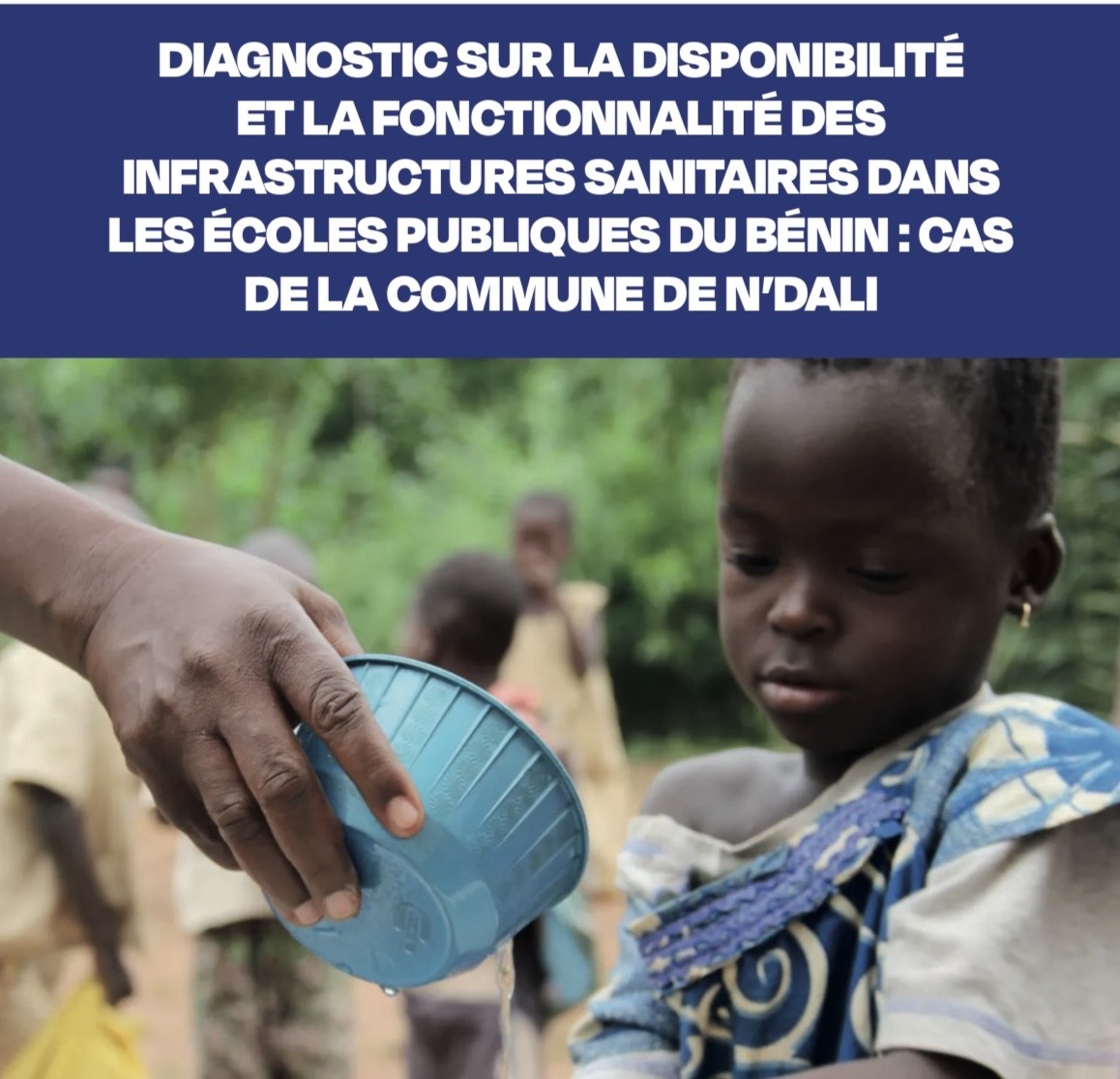
Assessment of water, sanitation and hygiene infrastructure in public primary schools in N’Dali, Benin — Farid Danko Foundation.
A Farid Danko Foundation initiative documenting access to water, sanitation and hygiene across all 94 public primary schools in N’Dali, with the aim of guiding more targeted, inclusive and sustainable interventions.
Understanding the Needs Before Acting
Social initiatives are more effective when they are grounded in a clear understanding of what communities actually need.
That principle led the Farid Danko Foundation to launch an assessment of the availability and functionality of sanitation infrastructure in public primary schools across the municipality of N’Dali, in northern Benin.
Since 2024, the Foundation has been supporting public schools in Benin, particularly in areas related to water access, sanitation infrastructure and support for children. Before undertaking further work in N’Dali, we wanted to establish a sufficiently detailed picture of existing conditions, identify priorities and avoid making decisions based solely on assumptions or isolated observations.
The assessment was published on 19 November 2025, to mark World Toilet Day.
Covering All 94 Public Primary Schools
The study covered all 94 public primary schools in N’Dali.
Fieldwork combined direct observation of school infrastructure with digital data collection. The teams assessed latrines, urinals, water sources, handwashing facilities, their functionality and accessibility, as well as the systems in place for maintenance and management.
Covering the entire municipality was important to us. The purpose was not to highlight a few particularly visible situations, but to build a broader picture of school conditions and understand how needs varied from one school to another.
The assessment also relied on the involvement of several local stakeholders, including school leaders, teachers, field enumerators, the N’Dali municipal authorities, local technical services, district representatives and school communities.
Infrastructure Exists, but Often Falls Short
The findings showed that the situation could not be understood simply by asking whether infrastructure existed.
While 81% of schools had latrines, only 69% had facilities that were actually functional. Accessibility was particularly concerning: only 7% of schools had arrangements adapted to students with disabilities.
Water access presented its own challenges. Although 64% of schools reported having a water source, 73% of respondents said the available water was never treated.
Handwashing was another area of concern. 41% of schools had no handwashing facility at all, and where facilities were available, access to water and soap was often inconsistent.
Waste management also raised important concerns, with 60% of schools relying on open-air burning, while none of the schools surveyed had a designated waste disposal site.
These figures are not merely technical indicators. They reflect the conditions in which children spend their school days. Access to water, functioning toilets and handwashing facilities has a direct bearing on their health, comfort and dignity.
Paying Particular Attention to Girls and Students with Disabilities
The assessment also examined school infrastructure through the lens of inclusion.
Separate sanitation facilities for girls and boys remain inadequate in many schools, while accessibility for students with disabilities is still extremely limited.
These conditions are particularly important for girls, especially when a lack of privacy, locks, water or appropriate sanitation makes menstrual hygiene management at school more difficult.
School infrastructure is therefore not only an issue of construction or maintenance. It is also about dignity, safety and equal access to education.
Turning Findings into Priorities for Action
The assessment was never intended to produce statistics for their own sake.
The purpose of the data was to help identify where action is most needed.
The recommendations include rehabilitating sanitation facilities, improving access to safe water, ensuring that handwashing stations are genuinely functional, strengthening waste management and supporting school hygiene committees.
The report also calls for continued hygiene education, stronger attention to menstrual health, and regular monitoring of WASH infrastructure.
One of the clearest lessons is simple: building infrastructure is not enough. It must function, be maintained, remain accessible to students and have systems in place to ensure that it lasts.
My Role in the Project
As President of the Farid Danko Foundation and Project Lead, I wanted this work to begin with a simple principle: before deciding where and how to act, we need to understand what already exists and what is genuinely missing.
The fieldwork was coordinated by Tahirou Dotia, with support from the Foundation’s team, local collaborators and institutional stakeholders across the municipality.
This assessment also reflects how I approach social action.
Support can take the form of financing infrastructure, providing equipment or responding to an immediate need. But it can also begin with producing reliable evidence so that the decisions that follow are better informed.
That work is less visible than a physical installation, but it can be just as important.
Making the Data Useful Beyond the Foundation
We also wanted the assessment to serve other actors working in the area.
The information collected can support local authorities, civil society organizations, technical partners and institutions seeking to better target their interventions in N’Dali’s schools.
I care deeply about this principle: when an organization produces useful knowledge, it should not remain confined to its own files.
Data can inform other decisions, open the door to partnerships and help stakeholders working in the same area coordinate their efforts more effectively.
What I Take Away from This Project
This project reinforced one conviction for me: social action does not always begin with a solution. Sometimes it begins by looking carefully at reality before deciding what to do next.
Across the 94 schools assessed in N’Dali, we found functioning infrastructure, active hygiene committees and local strengths that can be built upon. We also documented significant gaps in water access, sanitation, handwashing, accessibility and waste management.
The challenge is therefore not simply to identify what is missing.
It is to ensure that these findings can inform decisions, partnerships and, over time, tangible improvements in students’ daily lives.
Documenting the situation was the first step. The next is to make sure that this knowledge leads to better action.
Project Highlights
Project
Assessment of the Availability and Functionality of Sanitation Infrastructure in Public Schools in Benin: The Case of N’Dali Municipality
Lead organization
Farid Danko Foundation
Project Lead Farid Danko — President, Farid Danko Foundation
Project coordination Tahirou Dotia — Farid Danko Foundation
Location
N’Dali Municipality, Borgou Department, Benin
Study period
2025
Schools covered
94 public primary schools
Areas assessed
Safe water · latrines · urinals · handwashing · school hygiene · waste management · accessibility · infrastructure governance
Publication date
19 November 2025 — World Toilet Day
Purpose
To provide an evidence-based overview of school WASH conditions in N’Dali, guide the Foundation’s future interventions and make useful data available to stakeholders working to improve water, sanitation and hygiene in local schools.