
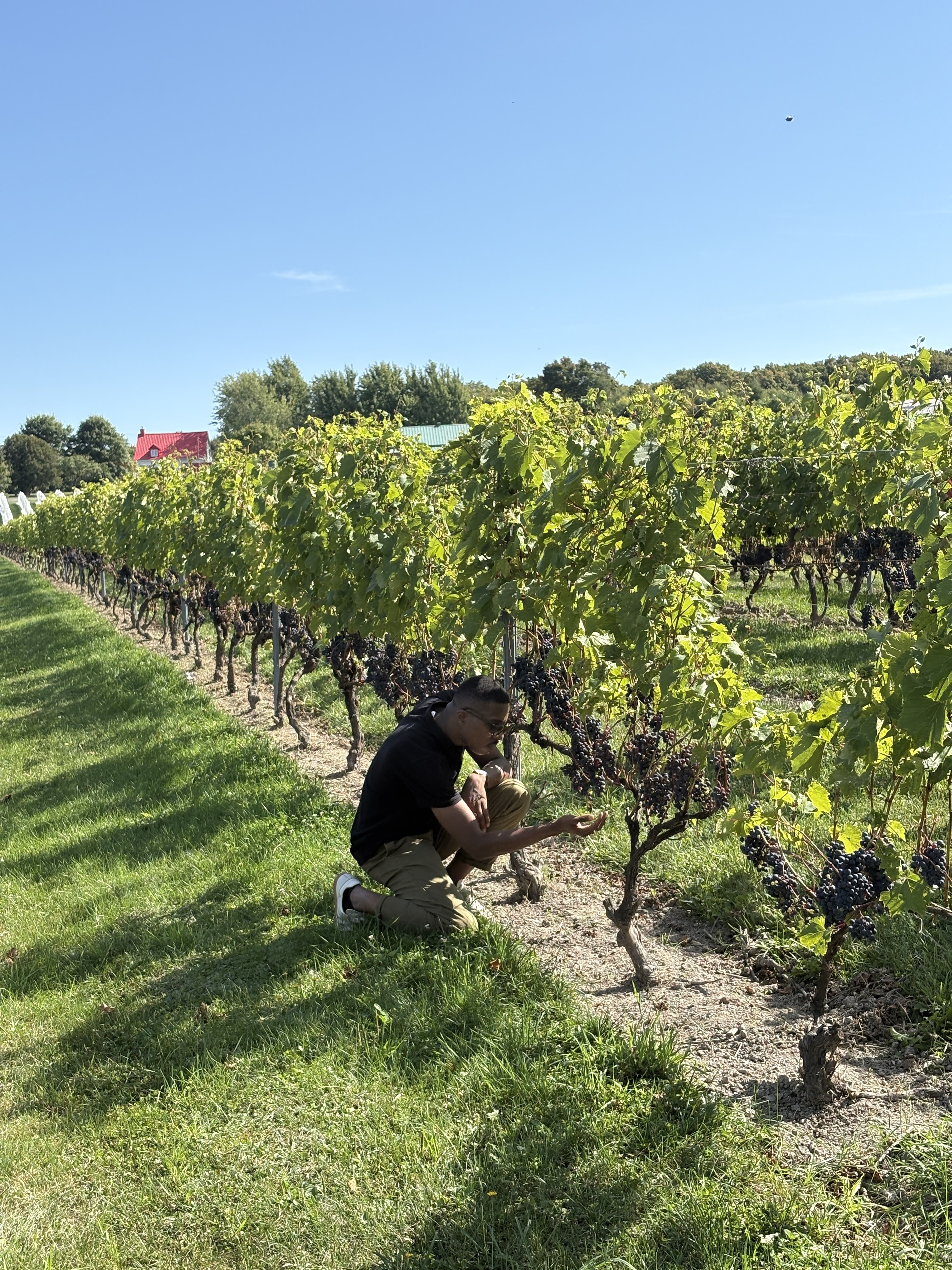
Wine Industry – Quebec. Field observations of production to better understand the factors driving value creation, industry development, and economic sustainability.
Wine Industry – Quebec. Field observations of production to better understand the factors driving value creation, industry development, and economic sustainability.
The Importance of Fieldwork in Economic Development
In discussions about economic development, strategies are often formulated based on reports, data, and theoretical analyses. These tools are necessary; they help structure thinking and identify courses of action.
But they have a limitation: they often remain detached from the reality on the ground.
On the ground, the economy takes on a much more concrete form. We see how productive activities are actually organized, how producers make their decisions, and what constraints influence their daily work.
Observing an agricultural supply chain, for example, allows us to understand much more than just the production process. We discover the relationships between different actors, working conditions, market access, and the challenges that hinder value creation.
These observations often reveal dynamics that are invisible in purely theoretical analyses. A cooperative may operate informally but effectively. A processing activity may exist without being recognized as a true economic driver. Conversely, certain initiatives presented as promising may face very concrete obstacles.
Fieldwork therefore allows us to ask the right questions.
What are the strengths of a sector?
What are the stages that limit value creation?
Which actors already play a structuring role in the organization of production?
Understanding these dynamics helps avoid interventions that are disconnected from reality. Strategies then become more relevant, because they build on what already exists and seek to strengthen local capacities rather than impose external models.
Field observation does not replace strategic analysis. It complements it. It allows decisions to be grounded in a nuanced understanding of economic and social contexts.
In many cases, it is these direct observations that reveal the true opportunities for transformation: improving an existing organization, structuring a local processing stage, or strengthening the links between the various actors in a value chain.
Sustainable economic development often begins with this simple yet essential step: taking the time to observe, listen, and understand how productive systems actually function.